
Science vs. Spirituality
We have begun our Summer Book Club, reading AFTER by Dr. Bruce Greyson. In our first week, we read the Introduction and the first Chapter. I would say Dr. Greyson catches the reader’s attention pretty quickly with the first story of unconscious Holly and her ability to recount a conversation that she had no part in; and Henry who met his deceased parents after an attempted suicide. We also learn of Dr. Greyson’s quite practical, but curious upbringing with his Chemist father, and his ultimate turn toward the study of unconscious thought through psychiatry.
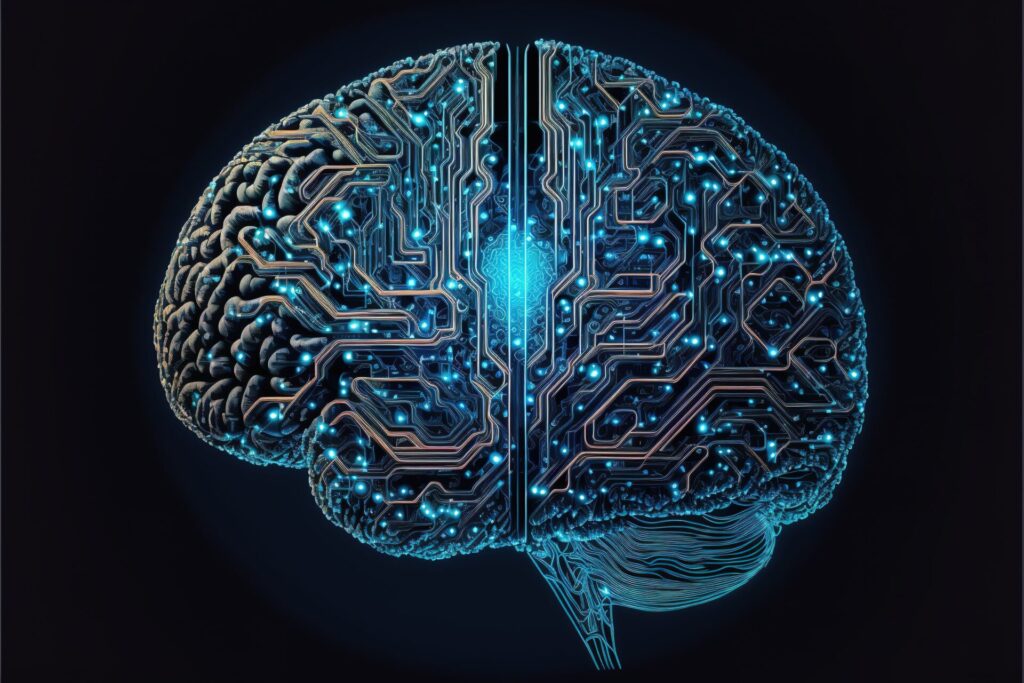
I really like the idea of scientific study within a realm that is seemingly “unexplainable”. What happens at death or after death is typically the realm of philosophy, religion or spirituality. These are often viewed to be at complete odds with science and the scientific process. However, in sharing his research on near death experience (NDE), Dr. Greyson hopes to bridge this supposed disconnect between spirituality and science.
“As I hope to show in this book, there is no reason NDEs can’t be both spiritual gifts and enabled by specific physiological events. The scientific evidence suggests that both ideas can be true without any conflict – which allows us to move beyond the artificial divide between science and spirituality.” (Introduction – pg. 11)
In my opinion, BKS Iyengar also attempted to bridge the gap between science and spirituality through his methodology of yoga. It is clear to me that his systematic approach captures the mind and the consciousness into the workings of our everyday actions. And, this connection can lead to a deeper and more meaningful understanding of our place in the world. Science has always been the basis of my understanding in the world, but when I began a regular practice of Iyengar Yoga and Vipassana Meditation, my practical and scientific mind was challenged by experiences I had that were definitely within the spiritual realm (for lack of better words). It has been fascinating for me to continue to discover that the practical practices that yoga encompasses at the mundane level can lead to such Divine manifestations – both small and large.
“There were a lot of things that couldn’t be fully explained in terms of physical particles and forces, but that happened anyway. It didn’t seem scientific to shy away from some things just because they were hard to explain. Those things that didn’t fit my worldview cried out to me to try to understand them, rather than write them off. Respecting things that are difficult to measure, rather than dismissing them as unreal, is not rejecting science. It’s embracing science.” (Chapter 1 – pg 22)
Greyson refers to study of the “unconscious” when speaking of NDE, but I would say “un-conscious” is an odd word in yoga circles. In yoga’s dualistic philosophy, pure consciousness (purusa) is pervasive and truly free from the confines and disturbances of our physical existence (Prakrti). It is through the practices of yoga that we ultimately look to unite (yog) this purity of consciousness to all that we may think is previously “unconscious” within our embodiment. This union of integrated consciousness with every layer of our being (samyama) is what brings about many “naturally super” powers that can be found listed in the 3rd chapter of The Yoga Sutras of Patanjali.
The Bhagavad Gita, another traditional yoga text, also compares our body to the wearing of clothes – at the time of death, one’s pure consciousness just changes garments to move on to the next life. However, in the context of a NDE, maybe there is also an ability to just strip down for a moment and still put the same clothes on again, just slightly repaired or transformed in the process? Holly’s ability to leave behind the confines of her “unconscious” mind and body and “follow” Dr. Greyson into the other room to hear a conversation she was not physically a part of may not be so surprising under yoga’s dualistic understanding.
Of course many questions came up for me in reading these first pages.
- Do experiences labeled NDEs all need to be occurring at “near death”? Or, are there other times, like in Holly’s case, where a person is in such a state of mental and physical disarmament that the consciousness is able to be “free” for a time?
- Henry’s experience of being able to see his parents together in one place in the “afterlife” gave him comfort and peace. I am wondering if there is an overall positive effect of NDEs on individuals, or if the effect might differ depending on what happens.
- Do NDEs lessen the fear of death? Or, is a belief in some kind of “AFTERlife” already a prerequisite for NDE?
Yoga, of course, ascertains that uniting our whole physical, mental, and emotional being with our pure consciousness ultimately leads us to ultimate freedom – freedom from fear, freedom from ignorance, freedom from all attachments and miseries that confine us to worldly existence. A physical death is not necessary, but a “death” of who we think we are and all that binds us is. I will be curious as the book progresses of any changes in your perceptions of consciousness and unconsciousness. Where do you bridge the gap between science and spirituality if at all? Are you open to new or hard to explain experiences in your own life or others’? What lines do you draw around truth and belief in individual experience?
THIS WEEK – READ CHAPTERS 2 and 3
