
June 12 – Final Yoga Sutra Sangha
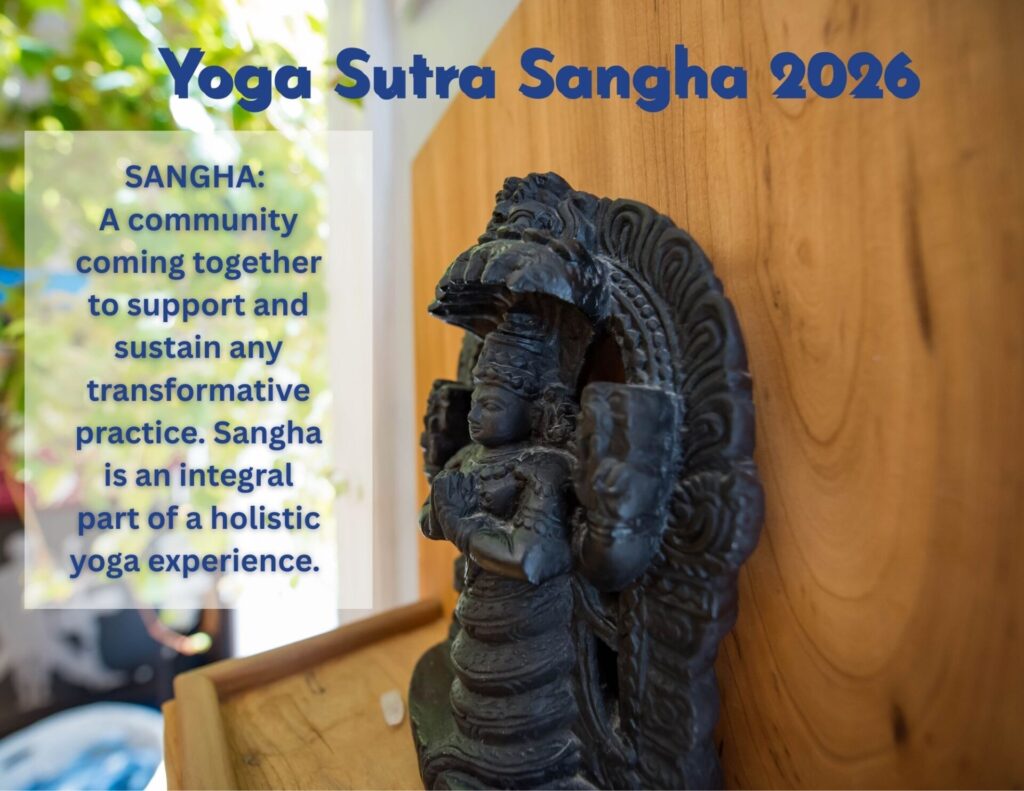
Please note the change of date for our final meeting of the 2-region Yoga Sutra Sangha!
If you have yet to join us for our discussions on The Yoga Sutras of Patanjali, it is not too late! This last meeting will be a great recap and review for any student interested in an introduction to this text. This series has covered some of the major topics to understand when embarking on a study of The Yoga Sutras as a whole. I hope that those who have participated have found some pathways of study and interest to support their practice and understanding of yoga.
For this meeting, READ in the Second Chapter, Sadhana Pada – Yoga Sutras 46-55
The above Yoga Sutras will hopefully resonate with every student of yoga who participates in studio classes. Asana (posture), Pranayama (breath regulation), and Pratyahara (drawing of the senses inward) are the limbs of yoga that are most easily taught from an outside source. They stand between the more personally directed foundations of the Yamas and Niyamas, the moral precepts and individual disciplines which we discussed in our May 1 meeting, and the last internalized limbs of Dharana (mental concentration), Dhyana (meditation), and Samadhi (ultimate freedom).
Reading about asana, pranayama, and pratyahara in The Yoga Sutras of Patanjali can give us some sense of purpose and direction within our practice of yoga. Are we finding the effects of asana as described? Can we search for that deeper awareness of our Self through the power of the individual breath and the greater life force that rides upon it? Are we becoming more sensitive and reflective in how we relate to ourselves and the world around us?
Here are some Questions for Contemplation and Discussion:
- According to Yoga Sutra II.46, “Asana is perfect firmness of body, steadiness of mind, and lightness of spirit”. In what ways have you found body, mind, and/or spiritual transformations in yourself through asana?
- Dualities within the practice and experimentation of asana – pain/pleasure, likes/dislikes, etc… – are definitely present until we are enlightened. Can you identify how the effort to observe and sometimes utilize dualities within practice may ultimately bring you to the experience of effortlessness? Have you found your way toward serenity even when faced with challenges or obstacles in practice?
- Where and how do you make connections (if any) of asana practice to pranayama practice?
- What are ways you find the breath to be an effective tool for body, mind, and/or emotional awareness within practice and/or life?
- It what ways have asana and pranayama guided you toward more focus on or sensitivity to your internal experience?
As always this meeting is online only and FREE! Please donate to your local Iyengar region if you are able.
