Yoga – A Knowledge Process
“Yoga allows you to rediscover a sense of wholeness in your life, where you do not feel like you are constantly trying to fit broken pieces together” BKS Iyengar
If you are reading this, likely you “do” yoga. Somewhere and for sometime, you have gone to a studio, stepped on a mat, and been given instructions about how and what to do to achieve some postures. As students, we all come to “do” yoga for various reasons from physical flexibility to mental quietude, but what do we really “know” about yoga?
Overall and ultimately, yoga is about integration. Integration of our body, mind, and spirit. Integration of our external life with our internal truths. And, this integration has to be a journey ultimately taken within our own Self. As a teacher, it is sometimes difficult to impart the importance of this foundation of “self study” (svadhyaya) in a yoga class when as students in a class we are focused on what the teacher is saying, keeping our attention on what we should be “doing.” Studying our Self – being curious about what we are actually doing as opposed to what we think we are doing – is the space where we can begin this “knowledge process.” The curiosity of knowing yoga, on and off the mat, is where actual yoga begins.
Prashant Iyengar, BKS Iyengar’s son, simply reminds us that yoga is not a “doing process,” but a “knowledge process.” Most of us check “yoga” off of our list for the day and are done with it. But, do you know WHY you did any asana? Do you know the effects of certain asanas on your own body or mind? Do you know that external and internal circumstances have a lot to do with how any posture might be done or received at any given time? Do you know what your mind, breath, emotions, reactions are while the “doing” is happening? What do you KNOW about yoga and what do you KNOW because of yoga?
The immense amount of writing the Iyengar family members and students have done in their lifetimes is a reminder of how much there is to KNOW about yoga, not to mention historical and traditional writings on the topic. And, what we might read and accumulate in knowledge about yoga will contribute to the integration of yoga into our life. Prashant Iyengar also stresses the importance of the shastras (texts) about yoga as part of our overall self study (svadhyaya) and “knowing process” of yoga.
The Yoga Sutras of Patanjali are the very essence of the “knowing process” of yoga. BKS Iyengar would always say he taught “Patanjali’s Yoga” not “Iyengar Yoga,” so what does that mean? It means we can look to The Yoga Sutras of Patanjali to guide us in all aspects of our practice and self-study of yoga. It will support and integrate yoga into all aspects of our life and Self.
Curious? Curious about your body, your actions, your mind, your reactions? Curious about how yoga puts our pieces of life and self together? Whether you have just begun or have been “doing” yoga for decades, it is never too late to integrate!
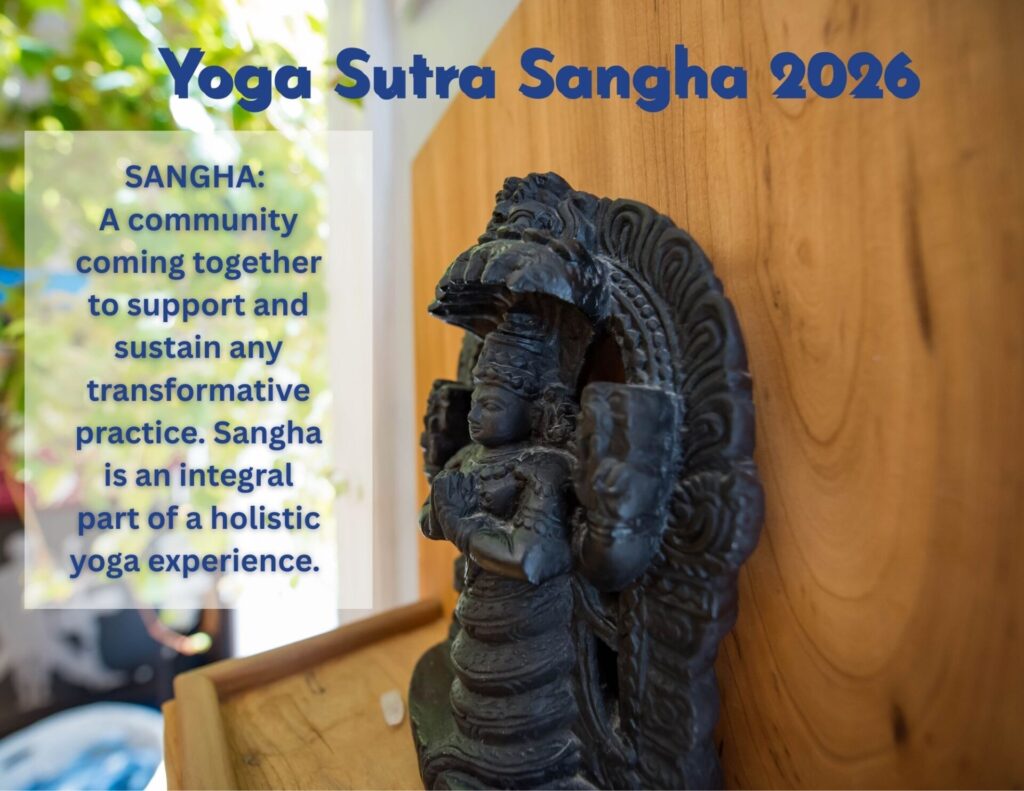
Join Jennie Williford in a region-wide Yoga Sutra Sangha (community of study) and see where your practice may take you! An introduction to the text and definition of yoga according to Patanjali will be held on January 30th – ONLINE ONLY – 4:30-6:00pm. It is FREE for students and members of either Midwest Iyengar Yoga region.
